Key Takeaways
Quick answer
A centralized exchange (CEX) is a company that holds your crypto and checks your identity. A decentralized exchange (DEX) is blockchain software you trade with from your own wallet, usually without identity checks. A CEX can fail or freeze withdrawals; a DEX can be hacked or front-run.
- A centralized exchange (CEX) is a company that holds your crypto for you; a decentralized exchange (DEX) is a set of smart contracts you trade with from your own wallet.
- On a CEX your main risk is the company: hacks, frozen withdrawals or bankruptcy. On a DEX it is code bugs, front-running and losing your own keys.
- CEXs normally check your identity; ESMA notes DeFi can be used without 'know your customer' checks, which also makes it attractive to scammers.
- Neither type is fee-free: a CEX charges trading fees and spreads, a DEX charges network gas and pool fees, and gas is paid even if a transaction fails.
- IOSCO says DeFi code is built and run by humans, so 'decentralized' does not mean nobody is responsible.
What is the difference between a CEX and a DEX?
Both let you swap one crypto-asset for another, and a CEX usually lets you pay in ordinary money too. The difference is who runs the market and who holds your assets while you use it.
- A centralized exchange (CEX) is a company. You open an account, send it your money or crypto, and it matches your orders and keeps your assets in wallets it controls. Our guide to what a crypto exchange is covers the basics.
- A decentralized exchange (DEX) is a set of smart contracts on a blockchain. The ethereum.org glossary defines it as “A type of Ethereum app that lets you swap tokens with peers on the network.” You connect your own wallet, and the trade settles directly on the blockchain.
The table below sums up the main differences. Each row is explained further down the page.
| Question | Centralized (CEX) | Decentralized (DEX) |
|---|---|---|
| Who holds your crypto? | The company (third-party custody) | You, in your own wallet (self-custody) |
| Do you open an account? | Yes, with the company | No; you connect a wallet |
| Identity checks (KYC)? | Normally yes | Usually none at the protocol level |
| How is the price set? | Order book run by the company | Off-chain order book or a pool with a preset formula |
| Main costs | Trading fee, spread, withdrawal fees | Network gas, pool fee, slippage |
| Biggest specific risks | Hacks, frozen withdrawals, bankruptcy, conflicts of interest | Smart-contract bugs, front-running, lost keys |
| Someone to complain to? | A company, sometimes a regulator | Often no identifiable party |
Neither column is “safe”. They move risk to different places.
How does a centralized exchange work?
A CEX works much like an online broker. You sign up, pass identity checks and deposit money or crypto. The company keeps a list of buy and sell orders (an order book) and matches them inside its own systems. The crypto sits in wallets the company controls, not in yours.
That convenience comes with a trade-off. The exchange holds the private keys, so it is your custodian. The US Securities and Exchange Commission (SEC) also warns about crypto firms that combine roles kept apart in traditional markets: “The commingling of these functions, exchange, broker-dealer and custodial functions, for example, creates conflicts of interest and risks for investors.”
In the UK, firms offering crypto exchange or custodian wallet services must register with the Financial Conduct Authority (FCA) under anti-money-laundering rules. The FCA says that registration “is not a recommendation or endorsement”. See how to check if a crypto firm is authorised.
How does a decentralized exchange work?
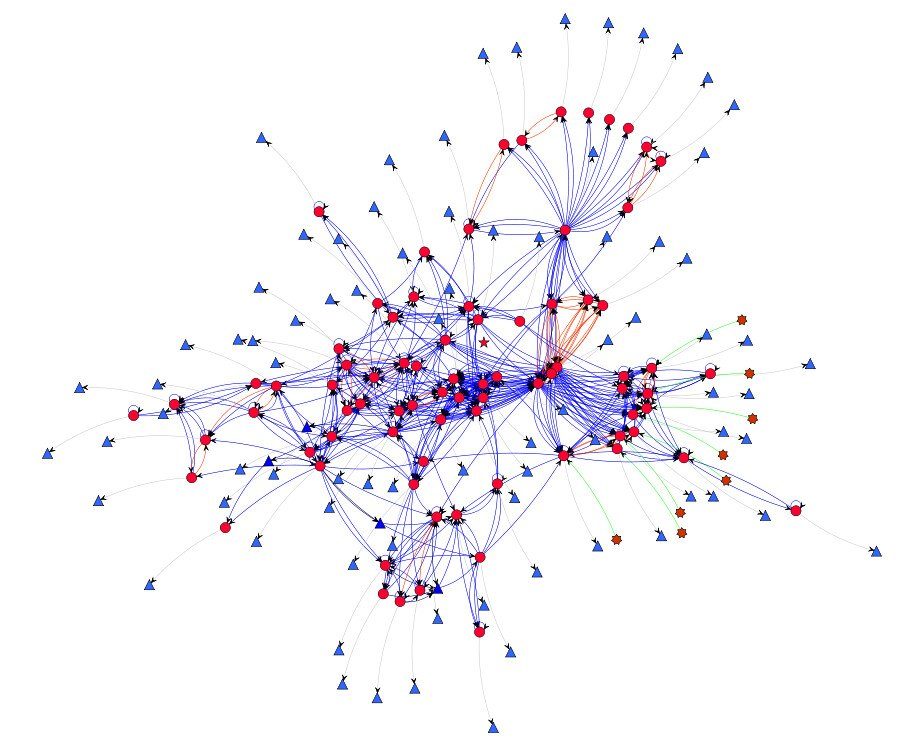
A DEX replaces the company in the middle with code. As ethereum.org puts it: “In DeFi, a smart contract replaces the financial institution in the transaction.” (DeFi, or decentralised finance, is the wider family of financial apps built this way.)
The International Organization of Securities Commissions (IOSCO), in its December 2023 DeFi report, describes two main designs:
- Order-book DEX. An operator keeps a list of orders off the blockchain and matches them; the matched trade then settles on the blockchain. IOSCO notes the operator may never control users’ crypto-assets.
- Automated market maker (AMM). There is no order book. People deposit pairs of tokens into a shared “liquidity pool” and receive tokens representing their share, plus a cut of trading fees. When you swap, you trade against the pool. IOSCO explains that the rate between the two tokens “is automatically determined according to a preset formula” based on how much of each token the pool holds.
Because you trade from your own wallet, you need to understand wallets and private keys before using a DEX. You also pay a network fee in the blockchain’s own coin on every transaction, explained in our guide to what Ethereum is.
Who holds your crypto on each type of exchange?
This is the most important difference.
On a CEX, the company holds your assets. The SEC’s December 2025 custody bulletin is blunt: “If the third-party custodian is hacked, shuts down, or goes bankrupt, you may lose access to your crypto assets.” It adds that some custodians lend out deposited crypto (“rehypothecation”) or pool customers’ assets together instead of holding them separately. In a 2023 alert the SEC went further: people who deposit assets with a crypto firm “might cease to have legal ownership of those assets”.
On a DEX, you keep custody. ethereum.org says: “You never give up control of your assets.” The EU’s European Securities and Markets Authority (ESMA) describes DEXs as allowing “non-custodial trading, meaning that they do not require users to entrust them with the control of their assets for trading.”
Self-custody shifts the burden to you. The SEC says: “With self-custody, you control your crypto assets and are responsible for managing the private keys to any of your crypto wallets.” And: “If you lose your private key, you permanently lose access to the crypto assets in your wallet.” There is no password reset.
Some exchanges publish “proof of reserves” to show they hold customer assets. Read what proof of reserves does and does not prove before relying on one.
Do you have to verify your identity on a CEX or a DEX?
On a regulated CEX, normally yes. Exchanges that register with regulators must follow anti-money-laundering rules, which include “know your customer” (KYC) checks. The FBI’s Internet Crime Complaint Center (IC3) treats a missing check as a warning sign: “Beware of financial services that do not ask for KYC information including name, date of birth, address, and ID before allowing you to send or receive money or cryptocurrency.”
On a DEX, usually not at the protocol level. The smart contracts accept trades from any wallet. ESMA sees this as a weakness, not a feature: “DeFi is especially vulnerable to scams and illicit activities, since virtually anyone can create or interact with DeFi protocols without the need to identify oneself and go through ‘know your customer’ checks.”
The same openness means anyone can deploy a token and a trading pool for it. That makes it easier for fraudsters to list look-alike or worthless tokens. Learn the red flags of crypto scams.
How do fees compare on a CEX and a DEX?
Neither type is free. The costs simply appear in different places.
- CEX: an explicit trading fee or commission, the spread between the buy and sell price, and often deposit or withdrawal fees. See crypto trading fees and the bid-ask spread.
- DEX: a network fee (gas on Ethereum) for every transaction, which ethereum.org says is paid whether the transaction succeeds or fails; a trading fee that goes to the liquidity pool on AMMs (IOSCO); and slippage, the price moving against you because your own trade shifts the pool’s balance.
Illustrative example. All rates and prices are assumptions for the arithmetic, not any platform’s or network’s real figures.
CEX: buy $1,000 of crypto with a 0.5% trading fee and a 1% spread (you pay half of it above the mid-price). Fee = 1,000 × 0.005 = $5.00. Spread cost ≈ 1,000 × 0.005 = $5.00. Total ≈ $10.00, or 1.0%.
DEX: swap $1,000 on a pool with a 0.3% fee. Pool fee = 1,000 × 0.003 = $3.00. Gas: 150,000 gas units × (20 + 1) gwei = 3,150,000 gwei = 0.00315 ETH (1 gwei = 0.000000001 ETH). At an ETH price of $2,000 that is $6.30. Total ≈ $9.30, or 0.93%, before slippage.
Now swap only $100 on the same DEX: $0.30 + $6.30 = $6.60, or 6.6%. Gas is a flat cost, so it weighs much more on small trades.
You can test your own numbers with our crypto fee calculator.
Does decentralized mean no one is responsible?
Not according to securities regulators. IOSCO’s DeFi report stresses that “the code that implements a DeFi protocol is created, deployed, operated, and maintained by humans” and that “Code currently used in DeFi arrangements is not self-implementing.” It asks regulators to identify the “Responsible Person(s)” behind a DeFi product, which can include founders, developers, holders of governance tokens and anyone with administrative control.
ESMA adds that even projects run by a DAO (a decentralised autonomous organisation that votes using tokens) may be more centralised than they look, because voting tokens can be concentrated or the project may depend on its creators.
For you, the practical point is different: even if someone is responsible in law, ESMA warns that DeFi users face “the lack of a clearly identifiable responsible party and the absence of a recourse mechanism if things go wrong.”
What are the risks of using a CEX or a DEX?
Risks that are bigger on a CEX:
- Platform failure. The SEC reported in 2023 that some crypto firms suspended withdrawals and that “Some crypto asset entities have entered bankruptcy proceedings, and it is unclear how much of their holdings (if any) customers might be able to recover.”
- No investor protection scheme. In the US, SIPC covers accounts at registered brokers, but the SEC says: “There are no such protections for accounts that you place with crypto asset entities.” The FCA says UK compensation cover is highly unlikely.
- Hacks and misuse of customer assets, including lending them out, as described above.
Risks that are bigger on a DEX:
- Smart-contract bugs. ESMA: “Many DeFi protocols go live without any audit or due diligence and the public open-source nature of the underlying smart contracts leaves their code vulnerabilities exposed to malicious actors.” ethereum.org says deployed code “usually cannot be changed to patch security flaws, while assets stolen from smart contracts are extremely difficult to track and mostly irrecoverable due to immutability.”
- Front-running. Your trade waits in a public queue before it is added to a block. Bots can see it and place their own trades around it. ethereum.org calls this a “sandwich” and says: “Users who are sandwiched face increased slippage and worse execution on their trades.” The wider practice is called maximal extractable value (MEV).
- Your own mistakes. A lost key, a wrong address or approving a malicious contract cannot be undone by a help desk.
Risks on both: crypto prices can fall sharply, and the FCA says you should be prepared to lose all your money. Before using any platform, work through our checklist for choosing a crypto exchange.
Blockhorizon is an education site. Nothing on this page recommends any exchange, protocol or crypto-asset.
Frequently asked questions
Is a DEX safer than a CEX?
Not in general. A DEX removes the risk of a company holding and losing your assets, but adds smart-contract, front-running and key-loss risk. ESMA also notes there is often no identifiable party or recourse if something goes wrong.
Do I need a crypto wallet to use a DEX?
Yes. You connect a self-custody wallet and sign each transaction yourself. You also need some of the blockchain’s own coin to pay network fees.
Can I get my money back if a DEX trade goes wrong?
Usually not. Blockchain transactions generally cannot be reversed, and ethereum.org says assets stolen from smart contracts are mostly irrecoverable.
Are DEXs legal?
Rules differ by country and are still developing. IOSCO has asked regulators to apply the same investor-protection outcomes to DeFi as to traditional markets. This page is not legal advice.
Article Sources
13 sources
Blockhorizon checks every figure, date and quotation against primary sources: regulators, statistics bodies and original technical documents. Read our editorial policy.
- IOSCO, Final Report with Policy Recommendations for Decentralized Finance (DeFi), FR/14/2023 (Dec 2023) — iosco.org (accessed 2026-10-02)
- ESMA, TRV Risk Analysis: Decentralised Finance in the EU: Developments and risks (11 Oct 2023) — esma.europa.eu (accessed 2026-10-02)
- ethereum.org, What is DeFi? (updated Jul 2026) — ethereum.org (accessed 2026-10-02)
- ethereum.org, Ethereum glossary (updated Jun 2026) — ethereum.org (accessed 2026-10-02)
- ethereum.org, Maximal extractable value (MEV) (updated Feb 2026) — ethereum.org (accessed 2026-10-02)
- ethereum.org, Smart contract security (updated Feb 2026) — ethereum.org (accessed 2026-10-02)
- ethereum.org, Gas and fees (updated Jun 2026) — ethereum.org (accessed 2026-10-02)
- SEC / Investor.gov, Crypto Asset Custody Basics for Retail Investors (12 Dec 2025) — investor.gov (accessed 2026-10-02)
- SEC / Investor.gov, Exercise Caution with Crypto Asset Securities: Investor Alert (23 Mar 2023) — investor.gov (accessed 2026-10-02)
- FBI Internet Crime Complaint Center, Alert on Cryptocurrency Money Services Businesses (25 Apr 2024) — ic3.gov (accessed 2026-10-02)
- UK Financial Conduct Authority, Cryptoassets: AML / CTF regime (updated Feb 2026) — fca.org.uk (accessed 2026-10-02)
- UK Financial Conduct Authority, Cryptoassets: Who needs to register (updated Sep 2026) — fca.org.uk (accessed 2026-10-02)
- UK Financial Conduct Authority, Crypto: the basics (updated Jan 2026) — fca.org.uk (accessed 2026-10-02)