Key Takeaways
Quick answer
For most UK individuals, crypto is taxed under Capital Gains Tax when you dispose of it — sell it, swap it, spend it or give it away. Gains above the £3,000 tax-free allowance are taxed at 18% or 24%. Crypto from work, mining or staking counts as income.
- HMRC says most individuals hold crypto as a personal investment and pay Capital Gains Tax when they dispose of it.
- Selling, swapping for another token, spending and giving crypto away all count as disposals.
- The Capital Gains Tax tax-free allowance is £3,000 for the 2026 to 2027 tax year.
- From 6 April 2026, gains are taxed at 18% within the basic rate band and 24% above it.
- Costs are averaged in a pool, except for tokens bought the same day or within 30 days of a sale.
How does HMRC tax crypto for most people?
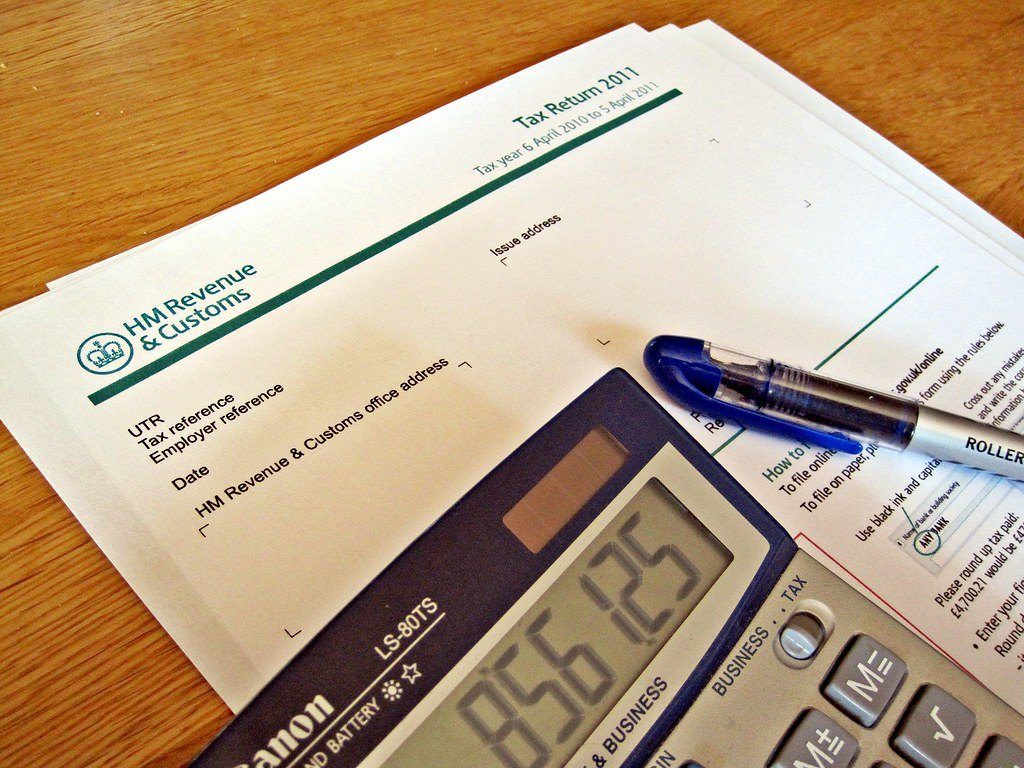
HM Revenue and Customs (HMRC), the UK tax authority, sets out its view in a public reference called the Cryptoassets Manual. On which tax applies, it says: “In the vast majority of cases, individuals hold cryptoassets as a personal investment, usually for capital appreciation or to make particular purchases. They will be liable to pay Capital Gains Tax when they dispose of their cryptoassets.”
Capital Gains Tax (CGT) is a tax on the profit — the gain — you make when you dispose of something that has gone up in value. You pay it on the gain, not on the whole amount you receive.
Income Tax is the other tax that can apply. The same manual says Income Tax and National Insurance contributions apply to crypto received from an employer as a form of non-cash payment, and to crypto from mining, transaction confirmation or airdrops. If your activity might amount to trading as a business, the manual has a separate section on what counts as trading.
This page explains GOV.UK and HMRC guidance in plain English. It is not tax advice. Rules can change; check GOV.UK for the current position before you report anything.
What counts as a disposal of crypto in the UK?
GOV.UK lists four kinds of disposal for crypto tokens:
| What you did | CGT treatment |
|---|---|
| Sold tokens for money | Disposal |
| Swapped tokens for a different cryptoasset | Disposal |
| Used tokens to pay for goods or services | Disposal |
| Gave tokens to another person | Disposal, unless a gift to your spouse, civil partner or charity |
The swap row is the one beginners miss. Trading one coin for another on an exchange is a disposal of the coin you gave up, even though no pounds reached your bank account.
Your gain is normally the difference between what you paid and what you sold for. GOV.UK adds that in some situations you must use the market value instead.
When do you have to pay or report tax on crypto gains?
The UK tax year runs from 6 April to 5 April. GOV.UK says that if your total gain for the tax year is above the CGT tax-free allowance, you must report the gain to HMRC and pay Capital Gains Tax.
Note the word total. The allowance applies to your overall gains for the year, across all your crypto and other assets — not to each coin or each sale separately.
Losses can help. GOV.UK says you can use capital losses to reduce your gain, but you need to report those losses to HMRC first. GOV.UK explains how to report and pay in a separate guide, “Report and pay your Capital Gains Tax”.
What is the tax-free allowance and what rates apply?
GOV.UK calls the tax-free allowance the Annual Exempt Amount. You only pay CGT on overall gains above it. For the 2026 to 2027 tax year it is £3,000 for individuals (£1,500 for trusts).
For gains made from 6 April 2026, GOV.UK gives these rates:
- Higher or additional rate taxpayers: 24% on gains.
- Basic rate taxpayers: 18% on the part of the gain that fits inside the basic Income Tax band, and 24% on any part above it.
GOV.UK’s method for basic rate taxpayers is: work out your taxable income (income minus your Personal Allowance and reliefs); work out your total taxable gains; deduct the £3,000 allowance; add what is left to your taxable income; then apply 18% to the part within the basic rate band and 24% to the rest. GOV.UK’s own worked examples use a basic rate band of £37,700 for 2026 to 2027.
How does pooling work for crypto costs?
If you bought the same token at different prices, you do not pick which coins you sold. HMRC uses pooling: each time you buy or receive tokens of one type, you add what you paid to that token’s pool, and the cost of any sale is a share of the pool’s average cost.
GOV.UK gives this example: you buy 100 tokens at £2 each (£200), then 300 at £1 each (£300). The pool holds 400 tokens costing £500, an average of £1.25 each. If you sell 200, the cost used in your tax calculation is £1.25 × 200 = £250.
There is one important exception. Tokens you buy on the same day as you sell tokens of the same type, or within 30 days of selling, are not pooled; GOV.UK says the cost rules for shares apply instead. Buying back soon after a sale therefore changes your calculation.
You can also deduct allowable costs such as transaction fees, advertising for a buyer or seller, drawing up a contract and getting a valuation for your calculation. GOV.UK says you cannot deduct costs already deducted against Income Tax profits, or mining costs such as equipment and electricity. Our guide to crypto trading fees explains where fees come from.
How do you work out the tax? An illustrative example
Illustrative only — made-up prices, our arithmetic, using GOV.UK’s method. It assumes no other gains or losses in the year and no same-day or 30-day purchases.
- Build the pool. You buy 10 tokens at £400 (£4,000), then 5 at £600 (£3,000). Pool = 15 tokens, cost £7,000.
- Cost of the sale. You sell 6 tokens for £1,500 each = £9,000, paying a £20 fee. Pooled cost = 6 ÷ 15 × £7,000 = £2,800. Allowable cost = £2,800 + £20 = £2,820.
- Gain. £9,000 − £2,820 = £6,180.
- Allowance. £6,180 − £3,000 = £3,180 taxable.
- Tax for a higher rate taxpayer. £3,180 × 24% = £763.20.
- Tax for a basic rate taxpayer with £20,000 taxable income: £20,000 + £3,180 = £23,180, which is below £37,700, so £3,180 × 18% = £572.40.
After the sale, the pool holds 9 tokens with a cost of £7,000 − £2,800 = £4,200. You can check the gain itself with our crypto profit calculator; it does not calculate tax.
What about crypto from work, mining or staking?
GOV.UK says crypto you receive from employment, or from activities such as mining, staking or lending, counts as income. Crypto from an employer is “money’s worth” and is subject to Income Tax and National Insurance contributions. If you receive tokens from mining, staking or lending (including DeFi) and are not trading, HMRC treats them as other taxable income.
Those tokens can still create a gain later. If you paid Income Tax on their value, GOV.UK says you will not pay CGT on that amount — only on any increase in value after you received them.
What records does HMRC expect you to keep?
GOV.UK asks for separate records for each pool of tokens and each transaction, including:
- the type of tokens
- the date you disposed of them
- the number of tokens
- the value in pounds sterling
- bank statements
- pooled costs
Values must be in sterling, so if you trade in dollars or stablecoins you need the pound value at the time of each transaction. Exchange statements and wallet histories make this much easier.
What can go wrong with UK crypto taxes?
- Forgotten swaps. Coin-to-coin trades are disposals even if you never cashed out.
- The 30-day rule. Buying the same token back within 30 days of selling means it is not pooled, which changes the cost you use.
- Missing sterling values. Without the pound value of each transaction you cannot work out the gain.
- Unreported losses. Losses only reduce gains once you have reported them to HMRC.
- Rule changes. GOV.UK publishes different allowances and rates for previous years; the figures here are for gains from 6 April 2026. Rules can change; check GOV.UK.
Tax is only one part of crypto risk. Before you buy or sell, learn the warning signs in our guide to crypto scam red flags.
Blockhorizon is an education site, not a tax adviser. Nothing here is tax, legal or investment advice. For your own situation, use GOV.UK guidance or a qualified tax adviser. US readers can see crypto taxes in the US.
Frequently asked questions
Is the £3,000 allowance per coin or per sale?
Neither. GOV.UK applies the tax-free allowance to your overall gains for the tax year, across everything you dispose of.
Do I pay tax if I give crypto to my spouse?
GOV.UK lists giving tokens to another person as a disposal, but excludes gifts to your spouse, civil partner or charity.
Are staking rewards a capital gain?
Not when you receive them. GOV.UK says tokens from mining, staking or lending count as income if you are not trading. When you later dispose of them, CGT applies to any increase in value since you received them.
Where can I read HMRC’s detailed rules?
In HMRC’s Cryptoassets Manual on GOV.UK. It has sections for individuals, businesses, decentralised finance (DeFi) and compliance.
Article Sources
6 sources
Blockhorizon checks every figure, date and quotation against primary sources: regulators, statistics bodies and original technical documents. Read our editorial policy.
- HMRC / GOV.UK, Check if you need to pay tax when you sell cryptoassets (updated 29 May 2025) — gov.uk (accessed 2026-10-02)
- GOV.UK, Capital Gains Tax: allowances — gov.uk (accessed 2026-10-02)
- GOV.UK, Capital Gains Tax: rates — gov.uk (accessed 2026-10-02)
- HMRC / GOV.UK, Check if you need to pay tax when you receive cryptoassets (updated 28 Apr 2025) — gov.uk (accessed 2026-10-02)
- HMRC Cryptoassets Manual, CRYPTO20050: which taxes apply (updated 28 Nov 2025) — gov.uk (accessed 2026-10-02)
- HMRC Cryptoassets Manual, CRYPTO22100: what is a disposal (updated 28 Nov 2025) — gov.uk (accessed 2026-10-02)