Key Takeaways
Quick answer
The IRS treats crypto as property, not currency. Selling it, swapping it for another coin or spending it can create a capital gain or loss, and crypto received as pay or rewards is income. You answer a yes/no question on Form 1040 and list disposals on Form 8949.
- The IRS treats digital assets as property, not currency, so general property tax rules apply.
- Selling crypto, swapping it for another crypto or spending it can each create a capital gain or loss.
- Crypto received as pay, or from mining or staking, is reported as income.
- Every Form 1040 asks a yes/no digital asset question; sales and swaps go on Form 8949.
- Custodial brokers report gross proceeds on Form 1099-DA for transactions from 1 January 2025.
How does the IRS treat crypto for tax purposes?
The US Internal Revenue Service (IRS) groups Bitcoin, other cryptocurrencies, stablecoins and NFTs under one label: digital assets. Its definition is broad — a digital asset is anything stored electronically that can be bought, sold, owned, transferred or traded.
The key sentence on the IRS digital assets page is short: “For U.S. tax purposes, digital assets are considered property, not currency.” The IRS’s virtual currency FAQ adds that the general tax principles for property transactions apply.
That one rule explains almost everything else on this page. Crypto is taxed much like other property you might own: you have a cost basis (what you paid), and when you get rid of it you compare what you received with that basis. The difference is a capital gain or a capital loss.
This page explains IRS guidance in plain English. It is not tax advice. Your situation may differ, and rules can change — check IRS.gov or a qualified tax professional before you file.
Which crypto transactions are taxable in the US?
The IRS FAQ and digital assets page cover the most common situations. In short:
| What you did | IRS treatment |
|---|---|
| Bought crypto with dollars and held it | Not a disposal; buying alone does not create a gain or loss |
| Sold crypto for dollars | Capital gain or loss |
| Swapped one crypto for another | Capital gain or loss on the crypto you gave up |
| Paid for goods or services with crypto | Capital gain or loss |
| Received crypto as pay for work | Ordinary income |
| Received crypto from mining or staking | Income, reported on Schedule 1 |
| Moved crypto between your own wallets | Not taxable |
| Received crypto as a genuine gift | No income until you dispose of it |
The swap row surprises many beginners. The IRS FAQ is explicit: “If you exchange virtual currency held as a capital asset for other property, including for goods or for another virtual currency, you will recognize a capital gain or loss.” You do not need to cash out to dollars for a taxable event to happen.
On the other side, moving coins from an exchange to a wallet you control — see our guide to crypto wallets and private keys — is not a sale. The FAQ says that when both wallets belong to you, “the transfer is a non-taxable event.”
How do you calculate a crypto gain or loss?
The IRS formula is simple: your gain or loss is the difference between your adjusted basis and the amount you received. Your basis is what you spent to get the crypto, “including fees, commissions and other acquisition costs in U.S. dollars,” according to the FAQ.
Gain or loss = amount received − cost basis, where cost basis = purchase price + acquisition fees.
Illustrative example 1 (our arithmetic, not real prices): you buy a coin for $20,000 and pay a $100 trading fee. Basis = $20,000 + $100 = $20,100. Eight months later you sell it for $26,000. Gain = $26,000 − $20,100 = $5,900. Because you held it for one year or less, it is a short-term gain.
Illustrative example 2 (swap): you hold one token with a basis of $1,800 and swap it for a different token worth $2,500 at that moment. You never touched dollars, but under the FAQ rule the swap is a disposal: gain = $2,500 − $1,800 = $700.
Our crypto profit calculator can help you run the same arithmetic. It does not calculate tax.
Is it a short-term or long-term gain, and why does it matter?
The holding period changes the tax rate. The IRS FAQ says that if you held the crypto for one year or less before selling or exchanging it, the gain or loss is short-term; if you held it for more than one year, it is long-term.
- Short-term gains are taxed as ordinary income at graduated rates (IRS Topic 409).
- Long-term gains are taxed at 0%, 15% or 20%, depending on your taxable income. For 2025, the IRS says the rate on most net capital gain is no higher than 15% for most individuals.
Losses help too, up to a limit. If your capital losses exceed your capital gains, Topic 409 says you can deduct the excess against other income up to $3,000 a year ($1,500 if married filing separately), and carry any remaining loss forward to later years.
Illustrative example 3: your crypto disposals for the year net to a $5,000 loss and you have no other capital gains. Deduction this year = $3,000; carried forward = $5,000 − $3,000 = $2,000.
What is the digital asset question on Form 1040?
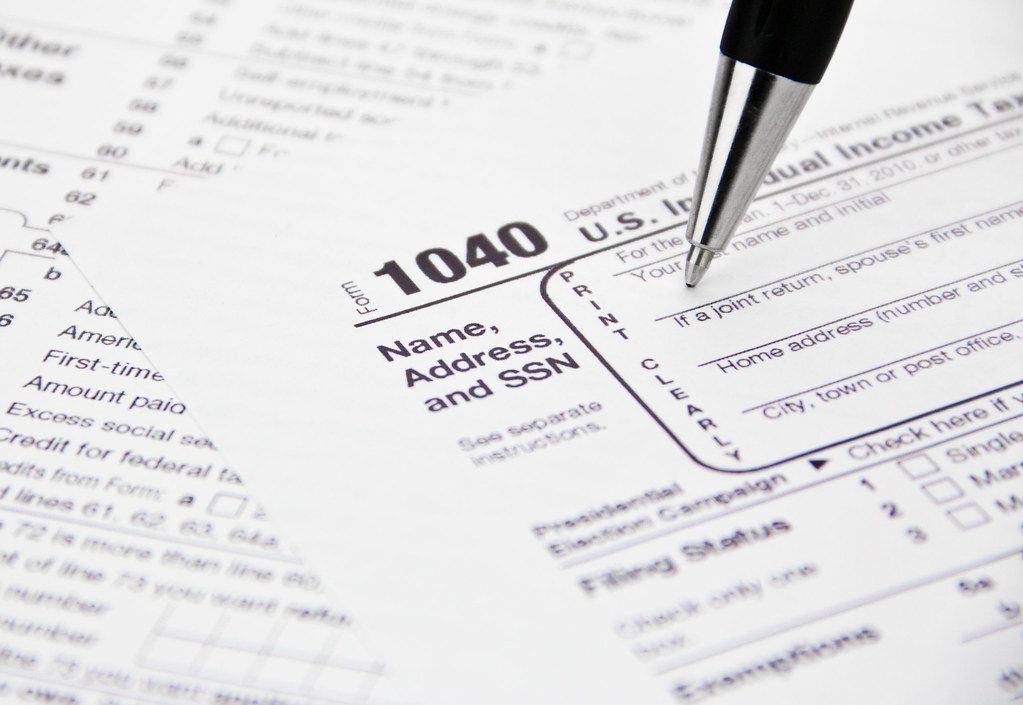
Form 1040 includes a yes/no question about digital assets that you must answer. The IRS gives the wording as:
“At any time during the tax year, did you: (a) receive (as a reward, award or payment for property or services); or (b) sell, exchange, or otherwise dispose of a digital asset (or a financial interest in a digital asset)?”
According to the IRS digital assets page, you check Yes if, for example, you received digital assets as payment, a reward or award, or from mining, staking or an airdrop; sold, exchanged or otherwise disposed of them; or used them to pay transfer fees.
You can generally check No if you only held digital assets, only bought them with real currency, or only moved them between wallets or accounts you own without paying fees in crypto. A version of the same question appears on other returns too, including Forms 1040-SR, 1040-NR, 1041, 1065, 1120 and 1120-S.
What is Form 1099-DA and what will it show?
Form 1099-DA, Digital Asset Proceeds From Broker Transactions, is the information return brokers use to report digital asset sales to the IRS; the IRS says customers receive statements with the same information. Here is what the IRS says about timing, word for word:
- “Brokers must report gross proceeds for transactions effected on or after Jan. 1, 2025.”
- “Brokers must report basis on certain transactions effected on or after Jan. 1, 2026.”
So for the 2025 tax year, a 1099-DA shows what you sold for, but not necessarily what you paid. You still need your own records to work out the gain.
The rules cover brokers that take possession of the assets their customers sell — such as custodial crypto exchanges, certain hosted wallet providers, digital asset kiosks and certain payment processors. The IRS says they do not include decentralized or non-custodial brokers that never take possession of the assets.
Getting no form does not mean there is nothing to report. The IRS is direct: “If you have digital asset transactions, you must report them whether or not they result in a taxable gain or loss.”
Which forms do you use to report crypto?
Which form depends on what happened:
- Sales, swaps and spending (capital assets): list each disposal on Form 8949, Sales and Other Dispositions of Capital Assets, then carry the totals to Schedule D (Form 1040).
- Mining, staking and forks: the IRS points to Schedule 1 (Form 1040), Additional Income and Adjustments to Income.
- Paid as an independent contractor: Schedule C, Profit or Loss from Business.
- Paid as an employee: the income goes on Form 1040 as wages.
The IRS FAQ also asks you to keep records of every receipt, sale, exchange or other disposal, along with the fair market value of the crypto at the time. Exchange statements, wallet histories and bank records all help.
What can go wrong with crypto taxes?
Most problems come from missing information, not complicated law:
- Forgotten swaps. A trade from one coin to another is a disposal even though no dollars moved.
- Missing cost basis. For 2025 transactions a 1099-DA may show proceeds but no basis. Without your own purchase records you cannot show what you paid.
- Activity no broker reports. Non-custodial apps and wallets are outside the 1099-DA rules, but the reporting duty is still yours.
- Fees paid in crypto. Paying a transfer fee in crypto is one of the IRS’s “Yes” examples for the Form 1040 question.
- Loss limits. Net capital losses above $3,000 a year ($1,500 married filing separately) are carried forward, not deducted all at once.
- Rule changes. The IRS pages used here were last updated between June and September 2026. Rules can change — check IRS.gov.
Tax is only one part of crypto risk. Before you buy or sell, learn the warning signs in our guide to crypto scam red flags.
Blockhorizon is an education site, not a tax adviser. Nothing here is tax, legal or investment advice. For your own return, use IRS guidance or a qualified tax professional. If you are in the UK, see crypto taxes in the UK.
Frequently asked questions
Do I owe tax if I just bought crypto and held it?
Buying crypto with dollars is not a disposal, so there is no gain or loss yet. The IRS says you can check “No” on the Form 1040 question if you only bought digital assets with real currency and did nothing else with them.
Is moving crypto to my own hardware wallet taxable?
No. The IRS FAQ says a transfer between wallets or accounts that all belong to you is a non-taxable event. Paying a network fee in crypto for the transfer is, however, one of the IRS “Yes” examples for the Form 1040 question.
Is crypto I received as a gift taxable?
For a genuine gift, the IRS FAQ says you do not recognise income until you sell, exchange or otherwise dispose of that crypto.
Do I have to report crypto if I lost money?
Yes. The IRS says digital asset transactions must be reported whether or not they result in a taxable gain or loss. Net capital losses can offset up to $3,000 of other income a year ($1,500 married filing separately).
Will Form 1099-DA show my cost basis?
Not always. The IRS says brokers report gross proceeds for transactions from 1 January 2025, and basis only on certain transactions from 1 January 2026. Keep your own purchase records.
Article Sources
4 sources
Blockhorizon checks every figure, date and quotation against primary sources: regulators, statistics bodies and original technical documents. Read our editorial policy.
- IRS, Digital assets (last updated 2 Sep 2026) — irs.gov (accessed 2026-10-02)
- IRS, Frequently asked questions on virtual currency transactions (last updated 30 Jun 2026) — irs.gov (accessed 2026-10-02)
- IRS, Topic no. 409, Capital gains and losses (last updated 24 Sep 2026) — irs.gov (accessed 2026-10-02)
- IRS, About Form 1099-DA, Digital Asset Proceeds From Broker Transactions — irs.gov (accessed 2026-10-02)