News analysis ·
Binance leak claim: crypto exchange hack or scam?
A forum seller says it holds data on 335 million Binance users. Binance calls it a likely scam. Here is what is really at risk and how to check your accounts.
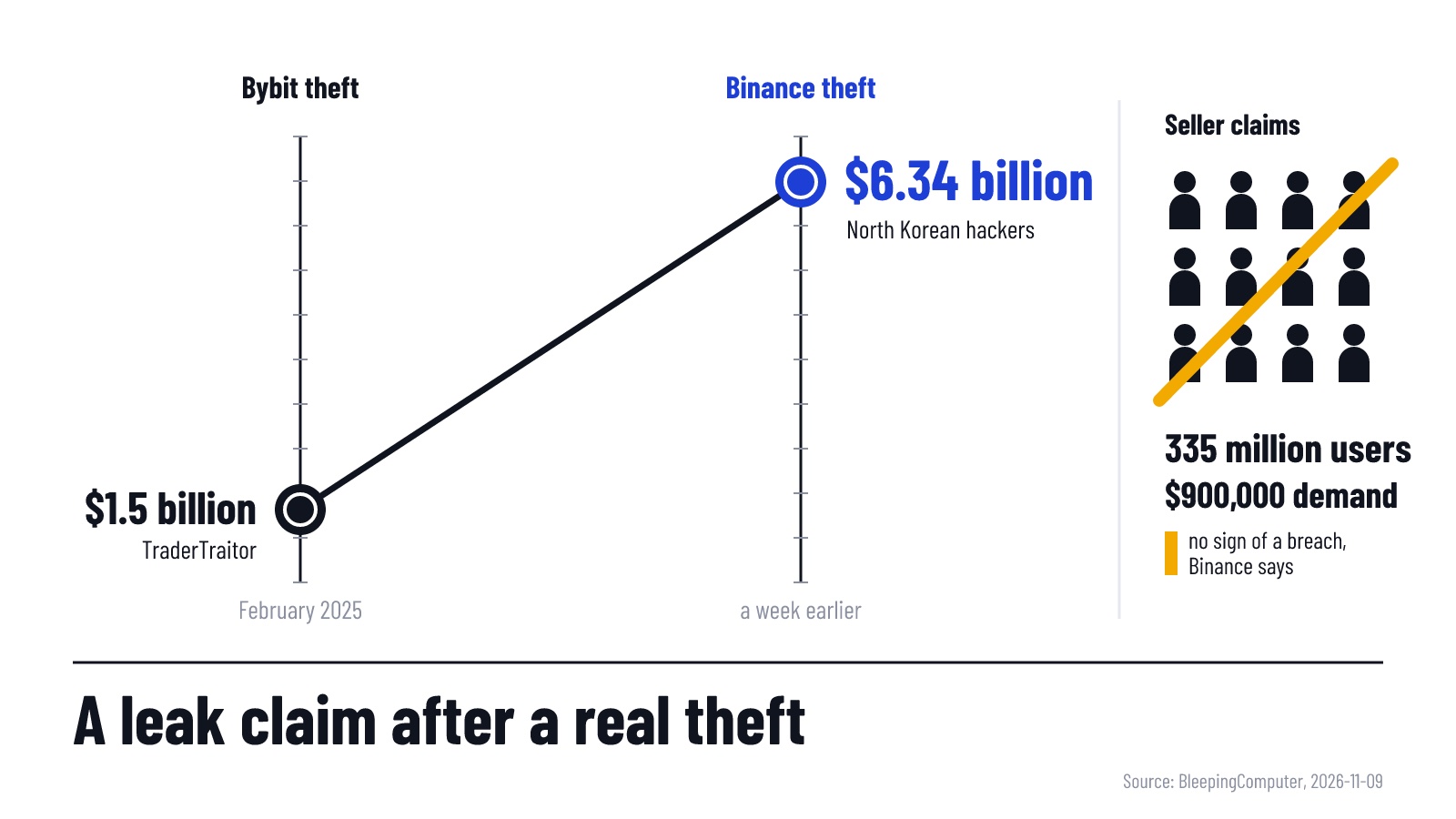
A seller on a new underground forum says it has stolen data on 335 million Binance users and wants $900,000 for it. Binance told BleepingComputer it found no sign of a breach and believes the listing is probably a scam. This article looks at how claims like this usually come about, why they still matter to ordinary users, and what you can check today.
What the seller claims, and what Binance says
The listing uses the ShinyHunters name, which belongs to a known extortion group. BleepingComputer reports that the seller is believed to be impersonating that group rather than being part of it. Borrowing a famous name is a common way to make a weak offer look serious.
According to the post, the haul includes identity (KYC) papers, phone numbers, emails, past transactions, login passwords, private keys for wallets and internal infrastructure details. KYC, or know your customer, is the identity check an exchange runs when you sign up. The seller framed the demand as an ultimatum: Binance pays, or the data is published.
Binance pushed back on several points. It said it holds no keys for users' external wallets and does not keep passwords in plaintext, meaning readable text. It also said it no longer operates in some of the countries named in the forum post. Other forum members were doubtful too, asking why anyone holding the keys to every wallet would bother selling data instead.
Crypto exchange hack or infostealer data?
A real crypto exchange hack means attackers got inside the company's own systems. Binance does not say how this particular listing was put together. It points to a pattern in earlier ones. As a Binance spokesperson put it: "Similar past listings have often involved infostealer malware data collected from users' own devices rather than a breach of Binance systems."
Infostealer malware is a small program that hides on a computer or phone. It often arrives inside a cracked app, a fake browser extension, a game mod or an email attachment. Once running, it copies saved browser passwords, session cookies that keep you logged in, autofill data and sometimes screenshots or files that look like wallet backups. It then sends this bundle to the attacker.
Criminals collect these bundles from many infected devices and sort them by website. A large pile of logins that mention one exchange can then be repackaged and sold as if it were a company breach. The logins can be real even when the exchange itself was never entered. That is why an exchange denying a breach does not mean every user is safe: the weak point may be your own device. Whatever the source, a stolen login or seed phrase can cost you your funds.
Why this matters after a real theft
The claim lands at a tense moment. A week earlier, Binance confirmed that North Korean hackers took about $6.34 billion in crypto from its wallet infrastructure. In that case, an employee was tricked during a fake job interview into installing malware, which opened a path into company systems. The FBI tied that theft to TraderTraitor, a state-backed group also known as Lazarus Group, Jade Sleet and APT38. BleepingComputer notes the same group was linked to the $1.5 billion Bybit theft in February 2025.
In the earlier theft, malware on a single employee's device was the way in. Fresh news of a hack also makes users nervous, and scammers know it. A leak claim, real or not, is often followed by emails, texts and calls that pretend to come from the exchange's security team and ask you to verify your account.
What this means for your own accounts
You cannot control an exchange's servers, but you can control the parts that infostealers and phishers target.
- Never share your seed phrase, private keys, 2FA codes or password with anyone, including people who say they work for Binance. Binance itself urged customers to keep these to themselves.
- Treat any message about a leak or a frozen account as suspect. Open the exchange app or type the address yourself instead of tapping a link.
- Check your devices for software you did not install, remove unknown browser extensions, and avoid pirated apps, which are a common way infostealers spread.
- Use a unique password for the exchange and an authenticator app for 2FA, and log out of other sessions from the security settings page if you see any you do not recognise.
If your crypto sits in a self-custody wallet, the seed phrase is the master key. Keep it offline, on paper or metal, and never type it into a website, a chat or a form.
What is still unknown
No one outside the seller has shown that the data is genuine, and Binance says it found no evidence of a compromise. It is not known how much of the listing, if any, comes from infostealer logs, older leaks or simple invention. A cautious approach is to assume your email and phone number may already be on criminal lists and to act on the checks above either way.
Sources
- BleepingComputer, 9 Nov 2026
This safety brief was drafted by AI from the reports cited above and published automatically once our checks passed (figures matched to sources, no copied sentences). No person reviewed it before publication. It is general safety information, not advice on what to buy or sell.