News analysis ·
CoinDCX's $16M loss from old deposit addresses
CoinDCX first denied, then admitted, a $16 million loss from retired deposit addresses users kept funding. What failed and how to check your own address.
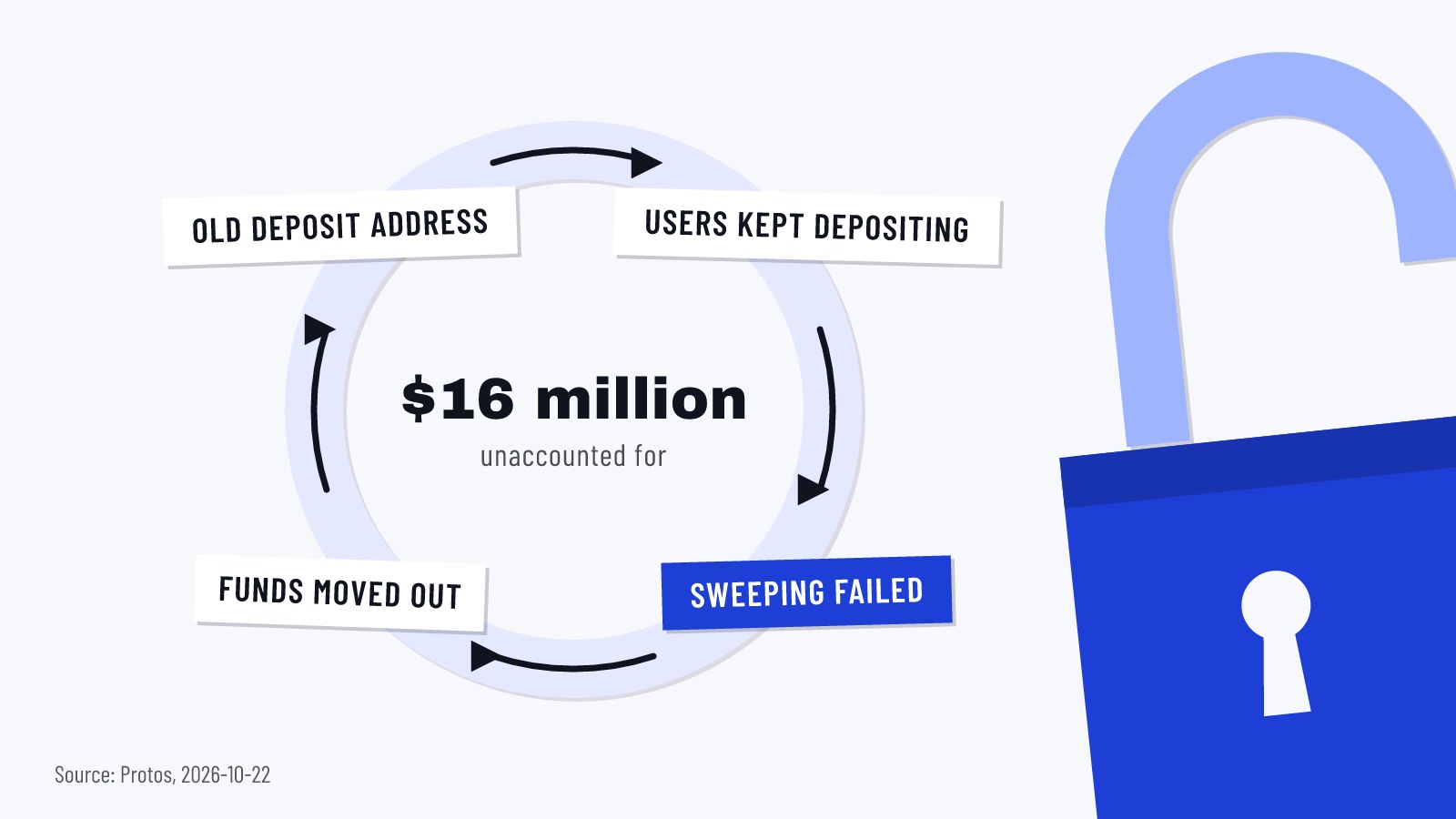
Indian crypto exchange CoinDCX has gone from calling a reported $16 million outflow a rumour to describing it as operational losses, Protos reported. The money sat on old deposit addresses that were compromised in July 2025, yet customers kept sending funds to them. This article looks at how a retired address can keep receiving money, what that means for ordinary users, and what is still unclear.
What happened at CoinDCX
On Thursday morning, an investigator known as Darcy, who works for the security firm Salus, flagged suspicious outflows totalling $16 million from addresses thought to belong to CoinDCX. Co-founder Sumit Gupta thanked Darcy, but said the link to the exchange was wrong and asked the researcher not to spread rumours.
The story then shifted. An update on the official CoinDCX account on X said the wallets were old ones, created in January 2025, compromised in July 2025 and not used by the exchange since. A second post added that customers had kept depositing into the compromised address even though the exchange had told them not to. CoinDCX said it regularly swept those deposits so they could be accounted for and secured, then admitted that "for a particular period, this sweeping process failed".
According to Protos, that failure seems to have come to light only after Darcy's public post. CoinDCX now calls the money operational losses and says the affected deposits were credited to user accounts. It has not explained how $16 million stayed unaccounted for over such a long stretch, and Protos had no reply to its email by publication.
How a crypto exchange hack can hide in a retired address
A deposit address is the string an exchange shows you when you want to send it crypto. Behind it sits a private key, the secret that controls whatever arrives. If that key is stolen, the address still works on the blockchain. Anyone can keep sending coins to it, and whoever holds the key can move them out.
Exchanges cannot switch an address off. They can only stop showing it in their app and warn users not to reuse it. Many people, though, copy an address once and save it in a wallet contact list, a spreadsheet or another exchange's withdrawal book. Months later they paste the old string again. In this case the exchange said it relied on sweeping, which means regularly moving new deposits from the old address to a wallet it still controls. The exchange admits that this process failed for a period.
This was not CoinDCX's first incident. The exchange lost $44 million in a hack last year, after an engineer's work laptop was compromised while also being used for side-gig work. The addresses in this story were compromised in July 2025, but the reports do not say whether the two incidents are linked.
Why investigators doubt the official account
Several on-chain researchers pushed back. Darcy disputed that the wallets had sat idle, pointing to gas distribution activity on them before and after the July 2025 breach. ZachXBT said one affected address was used by a liquidity provider for 10 months after the compromise and sent funds to the current CoinDCX hot wallet as late as May 2026. SomaXBT alleged that CoinDCX moved $70 million of a market maker's money through the address it called deprecated.
SpecterAnalyst said outright that CoinDCX and Gupta were lying, and Tanuki42 highlighted contradictions between the exchange's posts. Former MetaMask security specialist Taylor Monahan noted the laundering methods differ from last year's hack, which suggests different actors. SpecterAnalyst also described the warning sign: an address that used to forward funds to the exchange's hot wallet suddenly began sweeping everything into a single wallet that then swapped assets and used over-the-counter services. These are claims by researchers, and CoinDCX has not answered them in detail.
What this means for your own accounts
Whatever the final explanation, the user-side lesson is simple. A deposit address is not permanent. Treat it like a one-time instruction that you check fresh every time, not a bank account number you memorise.
- Open the exchange app and copy the deposit address again before every transfer, even if you have used the same exchange for years.
- Delete or relabel saved exchange deposit addresses in your wallet and withdrawal address books, so an outdated entry cannot be pasted by habit.
- Read exchange notices about address changes or security incidents, and stop using any address the platform says is retired.
- After a deposit, confirm it shows in your exchange balance; if it does not appear, contact support through the official app rather than resending.
It also helps to remember what a hot wallet is: an exchange wallet connected to the internet so it can process withdrawals quickly. It is convenient, but it is also where attackers aim first.
What is still unknown
Key questions remain open. CoinDCX has not said how long the sweeping failure lasted, how many users deposited to the old address in that time, or why the losses were noticed only after a public post. The researchers' claims about later use of the address, including the alleged market maker transfers, have not been confirmed by the exchange. The difference in laundering methods also leaves open whether the July 2025 attackers or someone else moved the money.
Sources
- Protos, 22 Oct 2026
This safety brief was drafted by AI from the reports cited above and published automatically once our checks passed (figures matched to sources, no copied sentences). No person reviewed it before publication. It is general safety information, not advice on what to buy or sell.