News analysis ·
Ledger reseller spyware: how a seed phrase can leak
Ledger owners who bought wallets in Dubai and Germany report $1 million drained. How suspected spyware leaks a seed phrase, and checks for your own device.
Ledger hardware wallet owners who bought their devices from official resellers in Dubai and Germany say they lost $1 million in a single day, according to Protos. The victims suspect spyware hidden inside the devices. This article explains how a tampered wallet can leak the one secret that protects your coins, and what you can check before you trust a new device.
What happened on November 14
Protos described three separate drains on November 14. An X user called New Babylon Order said $507,000 in USDT left his Ledger Stax. He said he bought it new on October 11 at Dubai Virgin Megastore, an official Ledger reseller, and that his recovery words were created on the device and never shared with anyone.
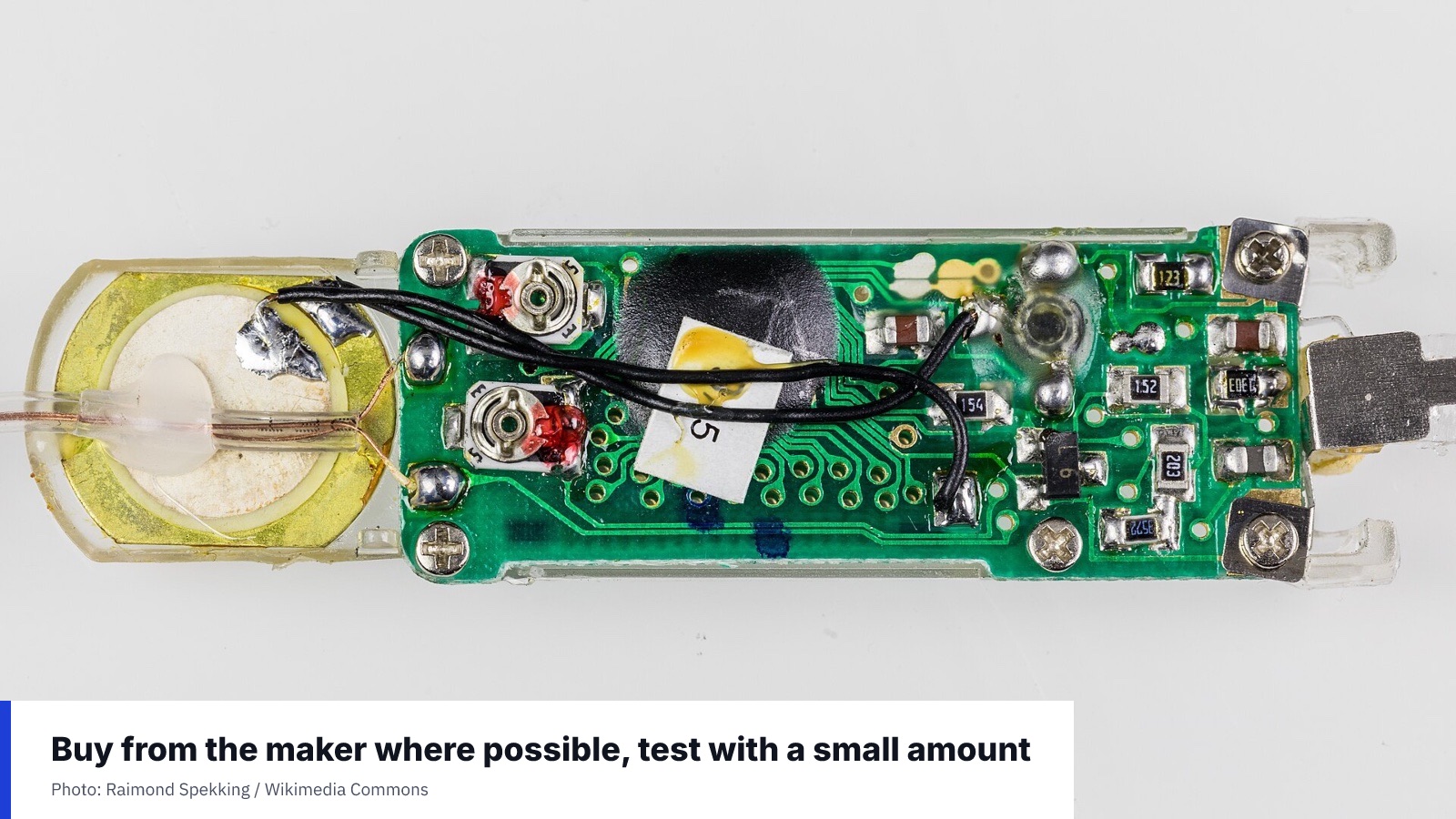
A second user, Rewinsky, said 1,300 SOL ($93,000) was taken from a $280 Ledger Flex bought at the same Dubai store. When that device was opened, spyware was found inside, and Mark Karpelès, who once ran Mt. Gox, backed up the account. Crypto analyst Iris found that the same thieves also emptied $630,000 from a different person's pair of Tron wallets, seconds after the Rewinsky drain.
A third user, Mikaelxp14, said $320,000 was drained from a Ledger Flex bought from MediaMarkt, an official reseller in Germany. There is no confirmation yet that this device contains spyware. Karpelès asked to see its interior and said "there is likely an antenna of some sorts there."
What is a seed phrase, and why does spyware want it?
A seed phrase is a list of ordinary words that a wallet creates when you set it up. Those words can rebuild every private key in the wallet on any compatible device. Whoever knows the words controls the coins, and no bank or support desk can reverse a transfer made with them.
A hardware wallet, often called a cold wallet, is meant to create and keep that secret offline, away from your phone and computer. That design only works if the device itself is honest. If someone has added a hidden chip with a radio part, the words can be sent out the moment they are generated. The owner does nothing wrong and still loses everything. That is why New Babylon Order's point matters: he says the phrase never left the device, which is what points to the hardware rather than to a phishing link or a careless backup.
A pattern, not a one-off
These cases follow a larger one. In October, Ledger users lost a combined $86 million after criminals put spyware into devices sold by Cryptobilis, an official reseller in Malaysia. Ledger then asked several South Asia resellers to pause sales.
Ledger has said it found no tampering on MediaMarkt devices and no implant-related losses in Europe. An X user named Johannes disputes that picture: he said his MediaMarkt wallet had spyware and that Ledger stopped replying after it received the device from him. Rival Trezor has also found spy implants in devices, and this week customer details from 27,000 of its orders were exposed in a leak at an outside partner. Separately, Ledger briefly served malicious code through the Optimizely exploit, which hit 186 major websites with crypto-stealing malware.
The lesson is uncomfortable. The word official on a shop does not prove that a sealed box was never opened along the supply chain.
What this means for your own accounts
You cannot inspect a circuit board at home, but you can lower the chance that a tampered device ever holds real money.
- Buy a hardware wallet directly from the maker where you can, and treat any third-party seller, even a listed one, as one more link that could be weak.
- Never use a device that arrives with words already printed, a card asking you to enter a phrase online, or packaging that looks resealed.
- Before moving savings, send a small test amount, wait, and confirm it stays put; split large holdings rather than trusting one new device with all of them.
- If you have any doubt about a device, stop using it, move funds to a wallet set up on hardware you trust with a fresh phrase, and report it to the maker and local police.
A fresh phrase matters. Moving coins to a new address that comes from the same old words does not help if those words have already leaked.
What is still unknown
Rewinsky's device is the one Protos says was opened and found to contain spyware. The MediaMarkt case is unconfirmed by Protos, and New Babylon Order has sent his wallet to a forensics lab and reported the theft to Dubai police. It is not yet clear where in the supply chain any tampering took place, or how many devices are affected. Protos said it asked Ledger and Virgin for comment.
Sources
- Protos, 18 Nov 2026
This safety brief was drafted by AI from the reports cited above and published automatically once our checks passed (figures matched to sources, no copied sentences). No person reviewed it before publication. It is general safety information, not advice on what to buy or sell.